Most people exercise with a water bottle they grabbed from the fridge—no formula, no strategy, just hope. The result? Either chronic dehydration that tanks performance, or over-hydration that causes hyponatremia and nausea. Getting your exercise hydration right isn’t complicated, but it’s also not one-size-fits-all.
Pre-Exercise Hydration: The 2–3 Hour Rule
Hydration doesn’t start when you grab your water bottle at the gym. Optimal pre-exercise fluid intake begins 2–3 hours before activity, giving your body time to absorb and stabilize fluid levels before sweat losses begin. This strategy, endorsed by the American College of Sports Medicine, prevents the erratic blood volume fluctuations that trigger cramps, dizziness, and premature fatigue.
The ACSM recommends drinking 16–24 fl oz (475–700 ml) of fluid 2–3 hours before exercise, followed by another 7–10 fl oz about 15–20 minutes before the session starts. This two-phase approach gives your kidneys time to excrete excess fluid as urine while maintaining plasma volume during activity. If you drink too much too close to exercise, you’ll either feel bloated or urinate before your workout even begins.
Water alone is fine for pre-exercise hydration if your meal and electrolyte status are normal. However, if you haven’t eaten in 4+ hours or you’re training in heat, include a small carbohydrate snack (15–30g of carbs) with your pre-exercise fluid. Research published in the Journal of the International Society of Sports Nutrition found that carbohydrates consumed 1–4 hours before exercise improve endurance by 2–3% compared to water alone.
- Timing: 16–24 oz, 2–3 hours before; 7–10 oz, 15–20 minutes before
- Temperature: Cool (50–59°F / 10–15°C) fluids are absorbed faster than ice-cold or warm
- Fluid type: Water is standard; add 4–8% carbohydrates (sports drink) only if exercising >90 minutes
- Form cue: Sip gradually rather than gulping—rapid intake triggers gastric discomfort and slower absorption
How Much Water Should You Drink During Exercise
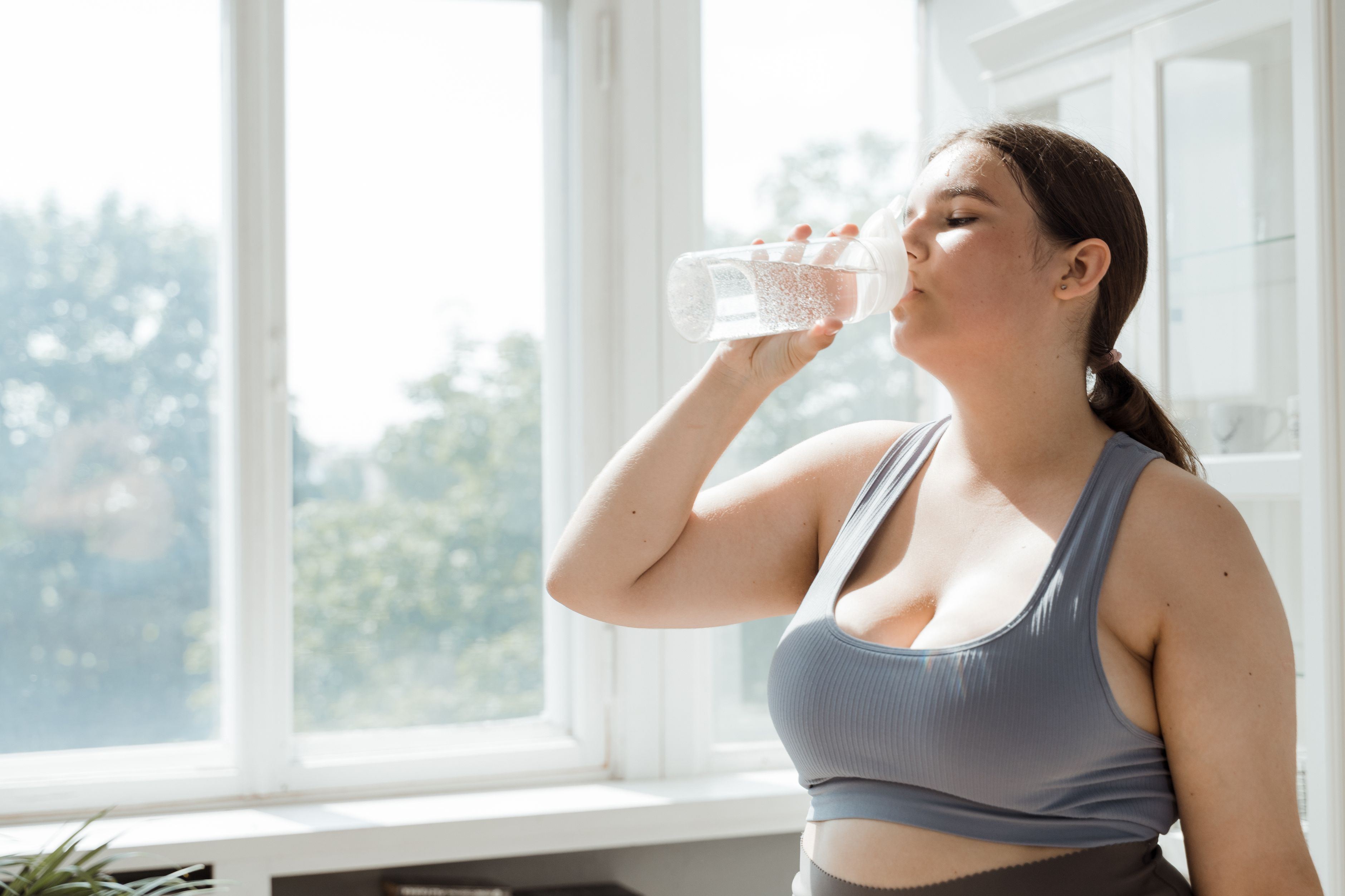
This is where most people go wrong. The goal during exercise is NOT to fully replace sweat losses in real-time—it’s to drink enough to prevent dehydration while avoiding fluid overload. Your small intestine can absorb roughly 800–1200 ml (27–40 oz) of fluid per hour, but sweat rates during intense activity often exceed 1500 ml/hour, creating an unavoidable fluid deficit. Accepting this deficit—and drinking to minimize it rather than eliminate it—is the key to consistent performance.
The ACSM guideline for during-exercise hydration is 7–10 fl oz (200–300 ml) every 10–20 minutes. For most people, this translates to sipping every 15 minutes during moderate to high-intensity work. That’s roughly 21–40 oz per hour, which covers 25–50% of typical sweat losses—enough to maintain blood volume and cognitive function without overloading your stomach.
The exact timing depends on exercise type and intensity. High-intensity interval training (HIIT) and running allow for faster drinking because the jarring motion opens the esophagus; steady-state cycling or swimming may require slower sips to avoid gastric upset. Always measure your sweat rate in your actual training conditions before race day. Weigh yourself nude before and after 1 hour of training in similar heat/humidity; each pound lost = 16 oz of fluid you need to replace per hour.
| Exercise Type | Duration | During-Exercise Intake | Fluid Type |
|---|---|---|---|
| Easy walk / recovery | <60 min | None required | Water if thirsty |
| Steady cardio (running, cycling) | 60–90 min | 7–10 oz every 15–20 min (21–30 oz/hr) | Water or 4–6% sports drink |
| High-intensity interval training | 45–60 min | 8–10 oz every 15 min (32–40 oz/hr) | 6–8% sports drink (carb + electrolyte) |
| Endurance (>90 min, cycling/running) | 90+ min | 8–10 oz every 15 min (32–40 oz/hr) | 6–8% sports drink with sodium (500–700 mg/L) |
| Team sports / intermittent activity | 60–90 min | 5–10 oz during stoppages | Water or 4–6% drink |
| Strength training (weights) | 45–60 min | 4–8 oz every 15–20 min (optional) | Water |
Post-Workout Rehydration Formula
Post-exercise rehydration is where most people leave gains on the table. You don’t just stop drinking after your workout ends—your body continues to sweat for 15–30 minutes post-exercise, and losses compound if you don’t rehydrate strategically. The ACSM recommends drinking 16–24 fl oz (480–720 ml) for every pound of body weight lost during exercise, spread over the 4–6 hours following your session.
Here’s the science: if you weigh 180 pounds and lose 2 pounds (2% of body weight) during a 90-minute workout, you’ve lost approximately 32 oz of fluid. Drinking all 32 oz immediately post-workout triggers rapid gastric emptying and frequent urination before absorption is complete. Instead, drink 24–32 oz in the first 30 minutes post-exercise, then an additional 8–16 oz every 30 minutes for the next 3–4 hours. This spacing allows complete absorption while maintaining sustained plasma volume.
Adding sodium (500–700 mg per liter) to post-exercise fluids is critical. Sodium increases thirst, slows urine production, and improves fluid retention, meaning more of what you drink actually stays in your bloodstream. A study in the Journal of Strength and Conditioning Research (2018) found that sodium-enhanced post-exercise rehydration resulted in 29% better fluid retention compared to plain water alone. If you didn’t eat during your workout and exercise lasted >75 minutes, include 1–1.2 g of carbohydrates per kilogram of body weight in the first 30 minutes post-exercise alongside fluids.
- Total rehydration target: 16–24 oz per pound of body weight lost
- Timing: 24–32 oz in first 30 min, then 8–16 oz every 30 min × 3–4 hours
- Sodium content: 500–700 mg per liter (found in sports drinks, electrolyte tablets, or salted food)
- Temperature: Cool (not cold) fluids are preferred; they’re absorbed faster and reduce gastric discomfort
- Form cue: Alternate between fluid and solid food (bananas, toast, yogurt) if eating post-workout—a small amount of food actually improves fluid absorption via active transport
How Much Water Should You Drink When Exercising in the Heat
Heat amplifies sweat losses by 50–100%, meaning your hydration needs climb dramatically in summer, outdoor, or indoor hot-yoga environments. A 160-pound runner might sweat 1 liter per hour at 65°F but lose 1.8–2 liters per hour at 95°F with 80% humidity. The ACE notes that dehydration risk in heat is non-linear—losses accelerate exponentially after air temperature reaches 75°F.
In heat, increase your during-exercise fluid intake to 8–10 oz every 15 minutes (versus the baseline 7–10 oz every 15–20 minutes), bringing your hourly intake to 32–40 oz. Pre-cooling is equally important: drink your pre-exercise fluid (16–24 oz, 2–3 hours before) at refrigerator temperature, and consider an ice slurry (ice chips blended with carbs) 15 minutes before starting. A 2019 study in the International Journal of Sports Medicine found that pre-cooling reduced core temperature by 0.9°C and improved endurance capacity by 4.2% in hot conditions.
Never rely on thirst in heat. Thermal adaptation and dehydration desensitize your thirst mechanism—by the time you feel parched, you’re already 1–2% dehydrated. Set a phone timer for every 15 minutes and drink on schedule, not on demand. If you exercise in heat regularly, acclimate deliberately: exercise in warm conditions for 10–14 consecutive days, progressively increasing duration. Heat acclimatization improves sweat distribution, lowers core temperature during exercise, and reduces your peak sweat rate by up to 25%.
recovery days and lighter sessions, drop to 5–7 oz every 20 minutes and use water.
Yoga and Pilates: Sweat rates are context-dependent. Hot yoga can produce 0.4–0.8 liters per hour; cool studio yoga produces 0.2–0.4 liters per hour. Drink 6–8 oz every 20–30 minutes in hot environments; in cool environments, drink only if thirsty or post-session. Most yoga practitioners underestimate losses in heat; use the post-exercise weight-loss formula to rehydrate fully.
Individual Sweat Rate: Find Your Number
The formulas above are starting points, not gospel. Your individual sweat rate depends on genetics, fitness level, body composition, age, sex, and acclimatization status—meaning two people can do identical workouts and lose 50% different amounts of fluid. If you want to optimize hydration (especially for events >90 minutes), measure your sweat rate.
The sweat-rate test takes 1 hour and requires a scale, a thermometer, and a normal training session in your actual race conditions. Here’s the exact protocol:
- Measure: Weigh yourself nude before exercise (body weight A)
- Measure: Record starting core temperature or ambient temperature
- Exercise: Train at your goal race intensity for exactly 60 minutes. Log total fluid consumed and urine production.
- Measure: Weigh yourself nude immediately post-exercise, before showering (body weight B)
- Calculate: (Weight A – Weight B) + Fluid consumed – Urine = Sweat loss in pounds. Convert to liters: 1 pound = 0.454 liters. This is your hourly sweat rate.
Example: You weigh 180 lbs pre-exercise and 178 lbs post-exercise, drank 20 oz (0.6 liters), and urinated 8 oz (0.24 liters). Sweat loss = (180 − 178) + 0.6 − 0.24 = 1.96 pounds = 0.89 liters per hour.
Repeat this test in different temperatures, at different intensities, and in race-day conditions. Someone’s sweat rate at 65°F might be 0.7 liters per hour, but at 85°F it could jump to 1.3 liters per hour. Build a personal database of your losses across scenarios, then use the formula: Replace 50–75% of your measured sweat loss during exercise, and 100% during recovery. In the example above, you’d drink 26–39 oz per hour during the race, and 32 oz (0.89 liters × 16) post-race.
Electrolytes, Carbs & When Water Isn’t Enough
Water is free, abundant, and sufficient for efforts under 60 minutes in cool conditions. But for anything longer or hotter, water alone is inadequate because it lacks sodium and carbohydrates—two compounds that amplify absorption, fuel performance, and prevent cramping.
Sodium in sports drinks: Your sweat contains sodium (40–80 mEq per liter), but commercial drinks contain only 10–25 mEq per liter, creating a sodium deficit during long efforts. Adding sodium to your hydration fluid increases absorption via active transport and reduces urine production, meaning more fluid is retained in your bloodstream. The ACSM recommends 300–600 mg sodium per liter for efforts >2.5 hours, or 500–700 mg/L for standard endurance work (60–90 min). One 20 oz bottle of most sports drinks provides 200–300 mg sodium; combine with a sports drink + electrolyte tablet (200–300 mg) to hit 500–600 mg.
Carbohydrates in sports drinks: During intense exercise >90 minutes, your muscles deplete muscle glycogen and blood glucose begins to fall. Carbohydrates in your drink (4–8%) provide exogenous glucose, delaying glycogen depletion by 30–45 minutes and maintaining power output. Research in Sports Medicine (2011) found that 6% carbohydrate drinks improved endurance capacity by 4.5% compared to water alone in 2-hour efforts. For HIIT and high-intensity work, use 6–8% drinks; for steady endurance, 4–6% is sufficient.
When to use electrolyte tablets or powders: If you prefer plain water or can’t carry sports drinks, electrolyte tablets (Liquid IV, Nuun, LMNT) provide sodium + potassium + carbs in individual servings. Drop one tablet into your water bottle every 4–6 oz and you’ve converted plain water into a 4–6% sports drink. Cost per serving is higher, but some athletes find tablets easier to carry on running or hiking.
Hyponatremia warning: Drinking excessive plain water (especially during ultraendurance events) without sodium creates exercise-associated transient hyponatremia (EAIH)—dangerously low blood sodium that causes nausea, confusion, and in severe cases, cerebral edema. This happens because plain water dilutes blood sodium while sweat losses compound losses. Drink a sodium-containing beverage during any exercise lasting >3 hours to prevent this condition.
- ✅ Drink 16–24 oz of fluid 2–3 hours before exercise to start hydrated
- ✅ Consume 7–10 oz every 15–20 minutes during steady activity (8–10 oz every 15 min in heat)
- ✅ Rehydrate with 16–24 oz per pound of body weight lost, spread over 4–6 hours post-exercise
- ✅ Add sodium (500–700 mg/L) and carbs (4–8%) for efforts >90 minutes or high-intensity work
- ✅ Measure your individual sweat rate in race-day conditions—genetics vary by 50%+
- ✅ Never rely on thirst alone, especially if over 40 years old; use a timer instead
Frequently Asked Questions
How much water should you drink a day when exercising regularly?
Start with the baseline recommendation of 0.5–1 oz per pound of body weight daily (a 180-pound person drinks 90–180 oz / 2.7–5.3 liters). On training days, add 16–24 oz for every pound lost during exercise. On rest days, return to baseline. If you exercise 5+ days per week, aim for the upper end of the range (1 oz per pound) to account for cumulative sweat losses and recovery demands. How to Drink Enough Water on a Busy Day: 7 Science-Backed Strategies 2025 offers practical protocols for building this habit.
Is it possible to drink too much water when exercising?
Yes. Drinking >1.5 liters per hour of plain water during exercise (especially efforts >3 hours) causes exercise-associated hyponatremia, where blood sodium drops below 135 mEq/L. Symptoms include nausea, headache, disorientation, and seizure. To prevent it: never drink more than 800–1000 ml (27–34 oz) per hour, always include sodium in your hydration for efforts >3 hours, and drink to thirst (not to exceed it). Your kidneys
Get Free Weekly Workout Plans
Join Coach Alex every week for:
✅ Proven home workout plans ✅ Nutrition tips ✅ Gear reviews
Subscribe Free — No Spam Ever →